A surety bond is a legally binding agreement that guarantees one party will fulfill an obligation to another. Unlike insurance, which protects the person who buys the policy, a surety bond protects a third party by ensuring that a business or individual follows through on a commitment. Surety bonds are required across a wide range of industries, from construction and auto sales to mortgage lending and freight brokerage, and they serve as a critical tool for consumer protection and regulatory compliance.
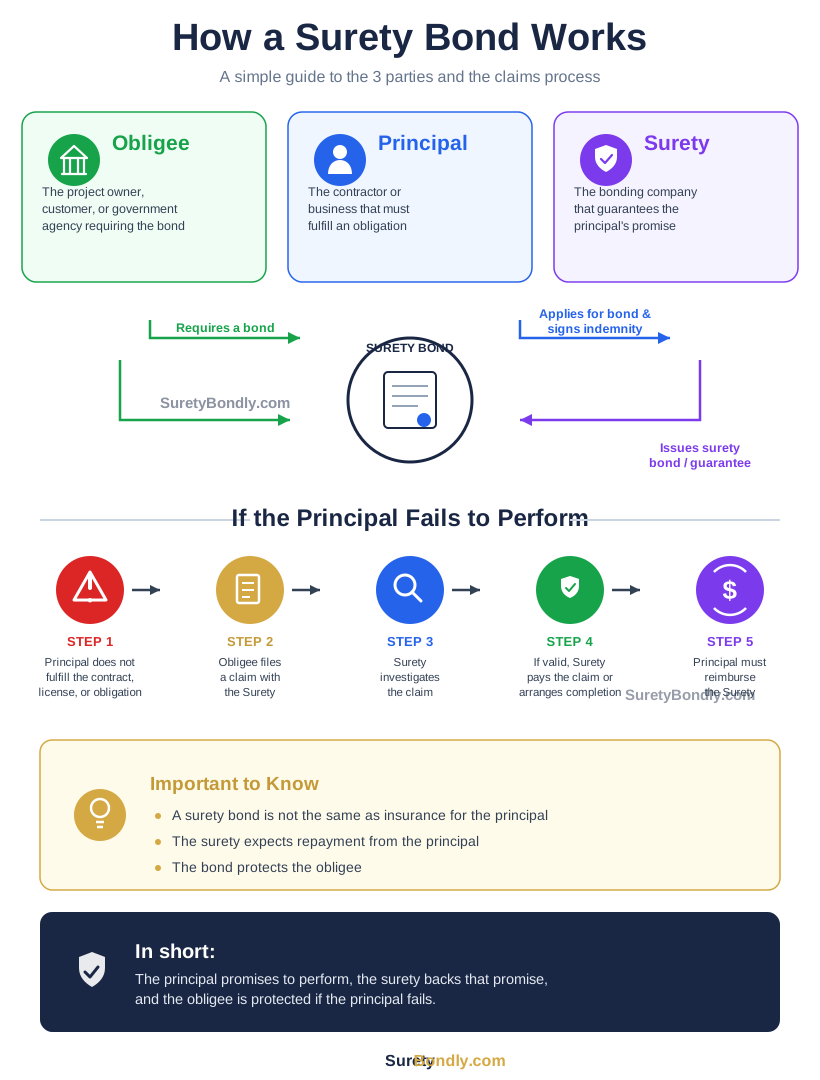
The Three Parties in a Surety Bond
Every surety bond involves three parties, and understanding their roles is the key to understanding how bonds work. The principal is the person or business that purchases the bond and is required to fulfill an obligation. The obligee is the party that requires the bond, which is typically a government agency, project owner, or regulatory body. The surety is the insurance company or surety company that backs the bond and guarantees that the principal will meet their obligation. If the principal fails to do so, the surety is responsible for compensating the obligee up to the full amount of the bond.
How Surety Bonds Work
When a principal purchases a surety bond, they are not buying protection for themselves. Instead, they are providing a financial guarantee to the obligee that they will operate according to the terms of the bond. If the principal violates those terms, the obligee or an affected party can file a claim against the bond. The surety company investigates the claim, and if it is valid, the surety pays out up to the bond amount. However, unlike insurance, the principal is then required to repay the surety for any claims paid. This repayment obligation is what makes surety bonds fundamentally different from insurance policies.
Why Are Surety Bonds Required?
Governments and regulatory agencies require surety bonds to protect the public from financial harm caused by businesses that fail to meet their obligations. A contractor who abandons a project, a car dealer who fails to deliver a title, or a mortgage broker who mishandles client funds can all cause significant financial damage. Surety bonds provide a financial safety net by ensuring that affected parties have a way to recover their losses, even if the business cannot or will not pay. This requirement also encourages businesses to operate responsibly, knowing that claims against their bond can result in personal financial liability.
Common Examples of Surety Bonds
Surety bonds appear in many different contexts. License and permit bonds are required by state and local governments as a condition of obtaining a business license. For example, a contractor license bond, auto dealer bond, or mortgage broker bond ensures that the licensed business will comply with applicable laws and regulations. Contract bonds are used in construction and include bid bonds, performance bonds, and payment bonds that guarantee a contractor will complete a project and pay their subcontractors and suppliers. Fidelity bonds protect businesses against employee theft and dishonesty. Court bonds are required in certain legal proceedings, such as appeals or estate administration.
Getting a Surety Bond
Obtaining a surety bond is generally a straightforward process. For most license and permit bonds, the application takes just a few minutes and approval can happen the same day. The cost of a surety bond is a small percentage of the total bond amount, typically ranging from 1% to 10% depending on the bond type, the required bond amount, and the applicant's credit and financial profile. Many common bonds for small businesses cost under $100 per year. For larger or more complex bonds, such as contract bonds for construction projects, the surety company may require financial statements, business references, and a more detailed review.