What Is the Nevada Contractor License Bond?
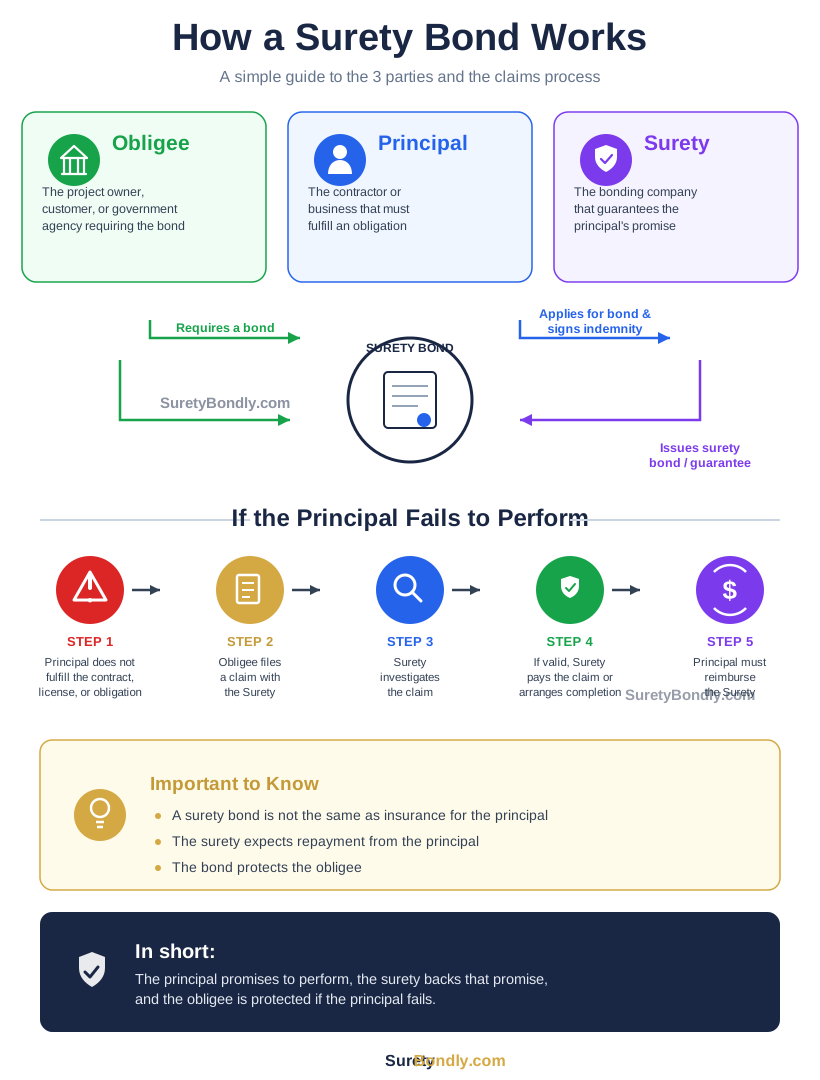
A Nevada contractor bond is a money guarantee. It protects your customers, not you. If you break contractor rules or leave a job unfinished, they can claim against it. The surety pays, then you pay the surety back.
Your bond is based on your license limit — the biggest job you can take. It runs from $1,000 to $500,000.
Who Needs This Bond in Nevada?
- Anyone doing contracting work in Nevada must carry the bond.
- New and renewing licensees keep it active to stay licensed.
How Much Will the Bond Cost?
Premium scales steeply with bond amount. Small contractors with $5,000 bonds pay $100/yr; large unlimited-license contractors with $500,000 bonds may pay $5,000–$25,000/yr.
| Credit Profile | Annual Premium | Approx. Rate |
|---|---|---|
| $1,000 bond | $100 | 10% |
| $5,000 bond | $100 – $150 | 2% – 3% |
| $15,000 bond | $150 – $450 | 1% – 3% |
| $50,000 bond | $500 – $1,500 | 1% – 3% |
| $250,000 bond, good credit | $2,500 – $7,500 | 1% – 3% |
| $500,000 bond, good credit | $5,000 – $25,000 | 1% – 5% |
How to Get Bonded — Step by Step
- Start your Nevada contractor license application.
- Buy your bond here. We match you with a strong surety.
- Send the bond to the Nevada State Contractors Board.
- Once approved, get licensed and start working.
Renewal & Continuous Bond Coverage
A Nevada contractor license lasts two years. Keep the bond current. A gap can suspend your license.
Frequently Asked Questions
How is the Nevada bond amount set?
By your license limit — the biggest job you can take. It runs from $1,000 to $500,000.
Does the Nevada bond protect me?
No. The bond protects your customers and the state, not you. If a claim is paid, you repay the surety. It is not insurance for you.
How fast can I get bonded in Nevada?
We shop several sureties for you, often within a day. Many bonds are issued the same day for good credit.
How much does the bond cost?
You pay a yearly premium — a small percent of the bond amount. Good credit means a lower rate.
How a Surety Bond Works
A contractor bond is a type of surety bond. The picture below shows the three parties and what happens if someone files a claim.
Ready to get your Nevada Contractor License Bond?
Apply in 2 minutes. Most quotes returned same day.
Start Your ApplicationRelated: All Nevada surety bonds · What is a surety bond? · How surety bond costs are calculated