Bond Amount
$25,000
Typical Premium
$175–$1,000/yr
Term
2 Years
Required By
CSLB (Contractors State License Board)
Get Your Bond Quote

What Is the California Contractor License Bond?

The California contractor license bond, also called the "Contractor's License Bond" or "CSLB bond," is a $25,000 financial guarantee required under California Business & Professions Code §7071.6. It must be filed with the CSLB and remain active at all times during the contractor's license term.

The bond protects four classes of claimants:

The CSLB will suspend any license whose bond lapses, and reinstatement requires both a new bond and payment of a reinstatement fee.

Who Needs This Bond in California?

How Much Will the Bond Cost?

California contractor bond premiums are highly credit-driven. Most contractors with established business and clean credit pay near the floor of the range.

Credit ProfileAnnual PremiumApprox. Rate
Excellent Credit$175 – $2500.7% – 1%
Good Credit$250 – $4001% – 1.6%
Fair Credit$400 – $6251.6% – 2.5%
Credit Challenges$625 – $8752.5% – 3.5%
Past Credit Issues$875 – $1,000+3.5% – 4%+

How to Get Bonded — Step by Step

  1. Have your CSLB license number ready (or note "new application" if you're applying with the CSLB).
  2. Apply online. Submit the form on this page — about 2 minutes.
  3. Underwriting. Soft credit pull only; no hit to your score.
  4. Pay the premium. Most contractors are issued the same business day.
  5. CSLB filing. Your surety files the bond electronically with the CSLB; processing typically clears within 5 business days.

Renewal & Continuous Bond Coverage

California contractor bonds renew every 2 years to align with the CSLB license cycle. The CSLB sends renewal notices about 60 days before the license expires; if your bond isn't current at renewal, the license is automatically placed in "inactive" or "suspended" status until corrected.

Frequently Asked Questions

How is the contractor bond different from the LLC employee bond?

The $25,000 contractor bond is required of every licensee. LLC contractors must additionally post a $100,000 LLC employee/worker bond protecting employees for wages. Sole proprietors and corporations don't need the LLC bond.

Can I bond a brand-new license application?

Yes. The CSLB requires bond proof before issuing the license. The bond is written naming you as principal with the CSLB-assigned license number filled in once issued.

What's the difference between this bond and a contractor's general liability insurance?

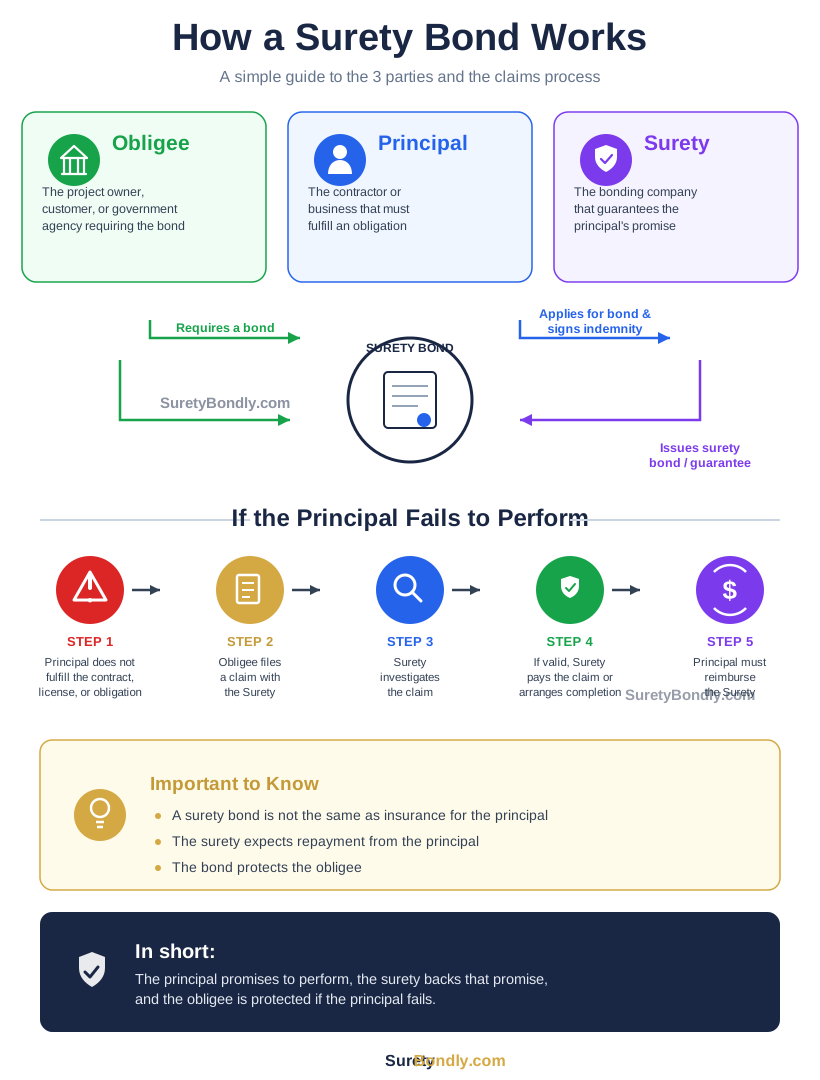
Insurance protects you. The bond protects your customers, employees, and the state. They are not interchangeable — California requires the bond regardless of whether you carry insurance.

My credit is bad — will I be denied?

Rarely. Most sureties write CA contractor bonds in some form even at past credit issues, though premiums climb steeply. A few markets specialize in challenged-credit contractor bonds.

Do I need an additional bond if I'm a B (general) contractor doing $500,000+ projects?

Not from the CSLB — the $25,000 license bond is the only license requirement. Larger projects often require contract bonds (bid, performance, payment) issued per-project, separate from the license bond.

Ready to get your California Contractor License Bond?

Apply in 2 minutes. Most quotes returned same day.

Start Your Application

Related: All California surety bonds · What is a surety bond? · How surety bond costs are calculated

Underwriting Disclosure. All surety bond applications are subject to underwriting review and approval by the issuing surety company. Quoted premiums are estimates only; final pricing is determined by individual underwriting factors, which may include personal and business credit history, financial statements, industry experience, and claims history. Many bonds qualify for instant online approval, while others may require additional documentation, financial review, or indemnitor signatures prior to issuance. SuretyBondly makes no representation, warranty, or guarantee of approval, eligibility, premium amount, bond form, or issuance timing. Bond amounts, forms, and requirements are governed by the applicable obligee and statutory authority and may change without notice. Information provided on this page is for general informational purposes only and does not constitute legal, financial, or tax advice.