What Is the California Notary Public Bond?
Before California hands you a notary commission, you post a $15,000 bond. It is one of the last steps.
The bond is really for the public. If a signer is harmed by a notary error, they can claim up to $15,000. You pay the surety back after.
To protect yourself as well? Many notaries add an errors and omissions (E&O) policy. The bond is for the public; E&O is for you.
Who Needs This Bond in California?
- All new applicants in California must carry the $15,000 bond.
- When you renew, you need a new bond for the next term.
How Much Will the Bond Cost?
Notary bonds are issued on a fixed schedule and do not require a credit check. When you order your bond, you can add your official notary stamp, a journal of notarial acts, and optional E&O insurance in the same checkout — everything you need to start notarizing arrives together. Total cost for the 4-year term:
| Credit Profile | Annual Premium | Approx. Rate |
|---|---|---|
| 4-year California notary bond | $38 – $75 total | Fixed price |
| Renewal (any term) | $38 – $75 total | Fixed price |
| Official notary stamp/seal (optional add-on) | +$20 – $40 | Required to notarize |
| Notary journal (optional add-on) | +$15 – $30 | Required by CA law |
| E&O insurance (optional but recommended) | +$25 – $400 total | Varies by limit |
How to Get Bonded — Step by Step
- Apply to become a notary.
- Buy your $15,000 bond on this page — no credit check.
- File the bond with the county clerk.
- Get commissioned and buy your stamp.
Renewal & Continuous Bond Coverage
Your California commission is good for four years. Get a fresh bond before you renew so your authority never drops.
Frequently Asked Questions
Can I get my stamp and journal with the bond?
Yes. You can add your official stamp and a journal of notarial acts to the same order, along with optional E&O insurance. Both are required in California, so bundling them means you are ready to start once you take your oath.
Does the California notary bond protect me?
No. The bond protects the public, not you. If the surety pays a claim, you owe that money back. To protect yourself, add an errors and omissions (E&O) policy.
How fast can I get my California notary bond?
Most people are approved right away. Your bond can be ready the same day, often in minutes.
How much does a California notary bond cost?
Notary bonds are a fixed price with no credit check. You pay a small fee for the whole term — not the full bond amount.
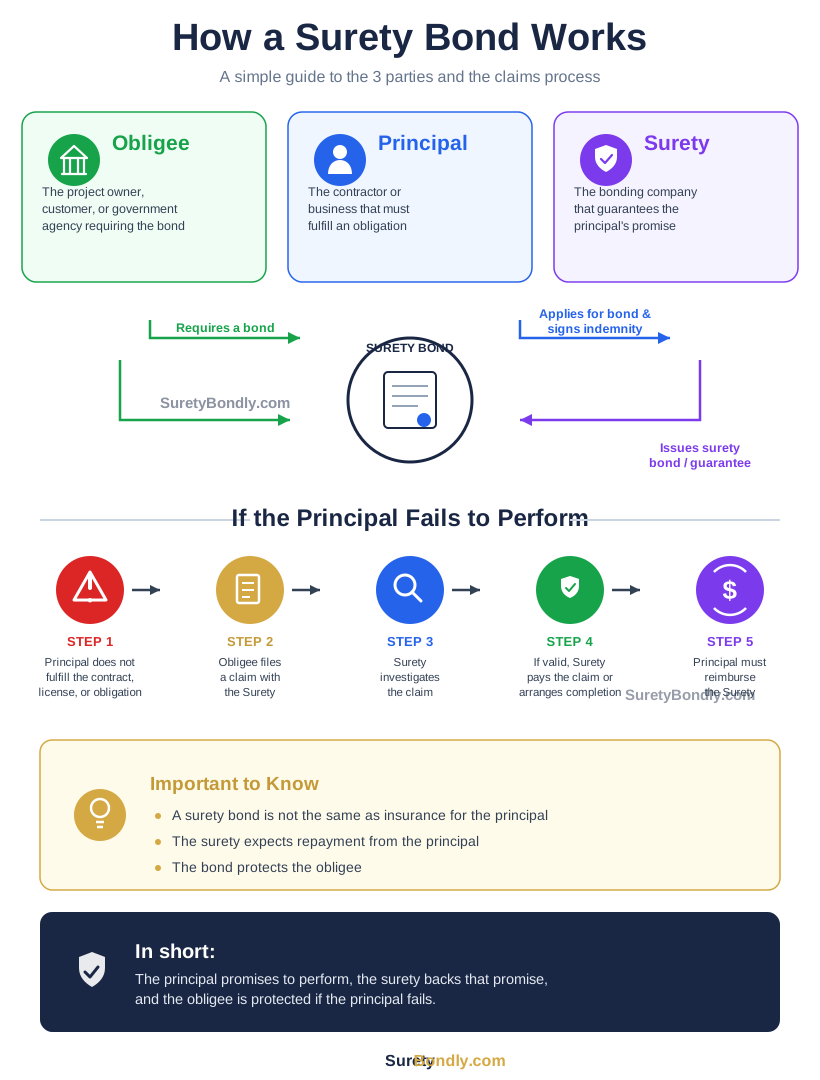
How a Surety Bond Works
A notary bond is a type of surety bond. The picture below shows the three parties and what happens if someone files a claim.
Ready to get your California Notary Public Bond?
Apply in 2 minutes. Most bonds issued same day.
Optional: Notary Errors & Omissions (E&O) Insurance
The bond protects the public. E&O insurance protects you from claims caused by a notarial mistake, and it is separate from your bond. Lower-limit policies are available, and higher limits up to $1,000,000 can be quoted.
Related: All California surety bonds · What is a surety bond? · How surety bond costs are calculated