What Is the Pennsylvania Notary Public Bond?
Pennsylvania will not commission you until your $10,000 bond is in place. It is a firm rule.
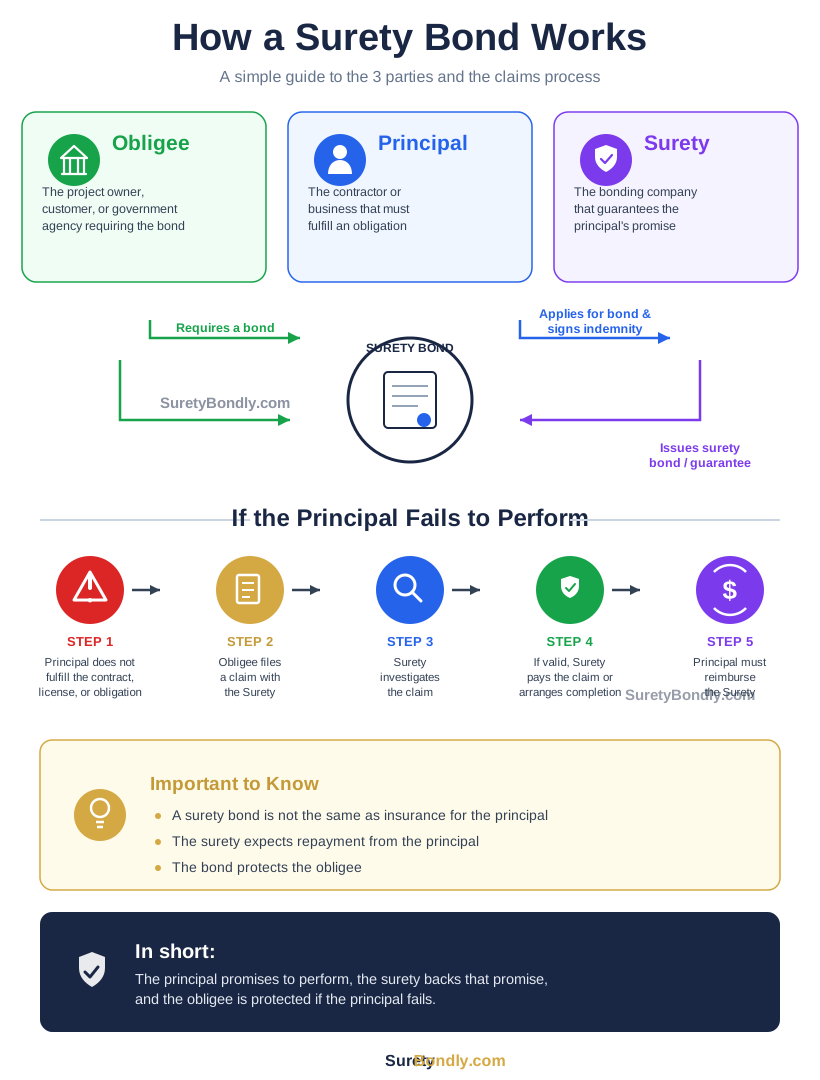
The bond backs your honesty as a notary. Someone hurt by a notary error can recover up to $10,000. You owe that money back to the surety.
Many notaries also carry errors and omissions (E&O) insurance. It covers your defense if a claim comes in. The bond cannot do that.
Who Needs This Bond in Pennsylvania?
- New notaries in Pennsylvania must post the $10,000 bond.
- At renewal, you post a fresh bond.
How Much Will the Bond Cost?
Pennsylvania notary bonds are issued at fixed rates with no credit check. The total premium for a 4-year term is typically $50:
| Credit Profile | Annual Premium | Approx. Rate |
|---|---|---|
| Pennsylvania notary bond ($10,000, 4 yr) | $50 | Fixed |
| E&O insurance (optional but recommended) | +$25 – $200 total | Varies by limit |
| State application fee + commission fee | $42 | Set by PA DOS |
How to Get Bonded — Step by Step
- Apply for your bond here. Most are approved right away, with no credit check.
- Finish your Pennsylvania notary application.
- File the bond to the PA Department of State Bureau of Commissions.
- Get your commission and order your stamp.
Renewal & Continuous Bond Coverage
Your Pennsylvania commission runs four years. Get a fresh bond before you renew so your authority never drops.
Frequently Asked Questions
Does the Pennsylvania notary bond protect me?
No. It protects the people you serve, not you. If the surety pays a claim, you owe that money back. For your own protection, add an errors and omissions (E&O) policy.
How fast can I get my Pennsylvania notary bond?
Approval is usually instant. You can have your bond the same day, often in minutes.
How much does a Pennsylvania notary bond cost?
Notary bonds are a fixed price with no credit check. The fee covers the whole term — not the full bond amount.
How a Surety Bond Works
A notary bond is a type of surety bond. The picture below shows the three parties and what happens if someone files a claim.
Ready to get your Pennsylvania Notary Public Bond?
Apply in 2 minutes. Most quotes returned same day.
Start Your ApplicationOptional: Notary Errors & Omissions (E&O) Insurance
The bond protects the public. E&O insurance protects you from claims caused by a notarial mistake, and it is separate from your bond. Lower-limit policies are available, and higher limits up to $1,000,000 can be quoted.
Related: All Pennsylvania surety bonds · What is a surety bond? · How surety bond costs are calculated