Bond Amount
$5,000
Typical Premium
$25–$50 (4-year term)
Term
4 Years
Required By
Illinois Secretary of State
Get Your Bond Quote

What Is the Illinois Notary Public Bond?

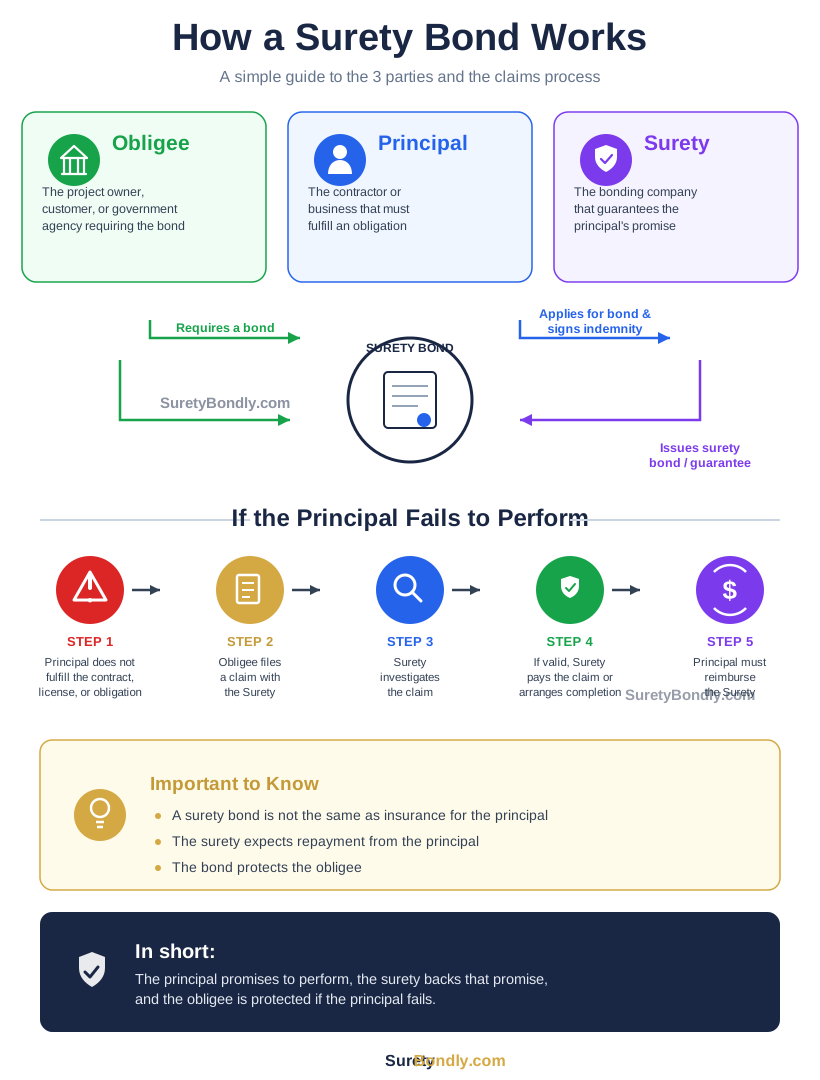
The Illinois Notary Public Bond is a $5,000 surety bond required by the Illinois Secretary of State under the Illinois Notary Public Act (5 ILCS 312). The bond protects members of the public who suffer financial harm due to a notary's misconduct, negligence, or failure to perform official duties properly.

If a notary makes an error or willfully misuses their commission, an injured party can file a claim against the bond. The surety pays valid claims up to $5,000, and the notary is then obligated to reimburse the surety. The bond is not insurance for the notary — it protects the public.

Illinois also permits Remote Online Notarization (RON). RON commissions require a separate $30,000 bond in addition to standard notary obligations.

Who Needs This Bond in Illinois?

How to Get Bonded — Step by Step

  1. Complete your notary application on the Illinois Secretary of State's website.
  2. Apply for your bond. Click "Get Your Bond Now" on this page and complete the short application. Most applicants receive instant approval.
  3. Receive your bond certificate. A bond certificate is issued same-day for most applicants.
  4. Submit to the Secretary of State. File the bond certificate along with your notary application and $15 filing fee to the Secretary of State's office.
  5. Receive your commission. Once approved, your notary commission and seal are issued by the Secretary of State.

Renewal & Continuous Bond Coverage

Illinois notary commissions are 4-year terms. Your bond must cover the full 4-year commission period. Set a reminder 30–45 days before expiration to renew both your commission and bond simultaneously. A lapsed bond automatically voids your commission until a new bond is filed.

Frequently Asked Questions

Is a notary bond required in Illinois?

Yes. Illinois law (5 ILCS 312/2-102) requires every notary applicant to file a $5,000 surety bond with the Secretary of State before a commission is granted. Without a bond on file, the commission will not be issued.

What is the difference between the standard and RON bond?

A standard in-person notary commission requires a $5,000 bond. If you also want authorization to perform Remote Online Notarizations (RON), Illinois requires a separate $30,000 bond. The two bonds are independent — you can hold both simultaneously.

Does the bond cover my mistakes?

No. The bond protects the public from your errors, not you. If a claim is paid by the surety, you are obligated to reimburse the surety in full. To protect yourself from liability, consider a notary errors & omissions (E&O) policy in addition to the required bond.

Can I get bonded before my application is approved?

Yes — and you must. The bond must be obtained and filed along with your application. Most applicants obtain the bond first, then submit everything together to the Secretary of State's office.

Ready to get your Illinois Notary Public Bond?

Apply in 2 minutes. Most quotes returned same day.

Start Your Application

Related: All Illinois surety bonds · What is a surety bond? · How surety bond costs are calculated

Underwriting Disclosure. All surety bond applications are subject to underwriting review and approval by the issuing surety company. Quoted premiums are estimates only; final pricing is determined by individual underwriting factors, which may include personal and business credit history, financial statements, industry experience, and claims history. Many bonds qualify for instant online approval, while others may require additional documentation, financial review, or indemnitor signatures prior to issuance. SuretyBondly makes no representation, warranty, or guarantee of approval, eligibility, premium amount, bond form, or issuance timing. Bond amounts, forms, and requirements are governed by the applicable obligee and statutory authority and may change without notice. Information provided on this page is for general informational purposes only and does not constitute legal, financial, or tax advice.