Bond Amount
$5,000
Typical Premium
$25–$50 (5-year term)
Term
5 Years
Required By
Ohio Secretary of State
Get Your Bond Quote

What Is the Ohio Notary Public Bond?

The Ohio Notary Public Bond is a $5,000 surety bond required under Ohio Revised Code §147.04 for every person commissioned as a notary public by the Ohio Secretary of State. The bond ensures that the notary will faithfully perform their official duties during the 5-year commission term.

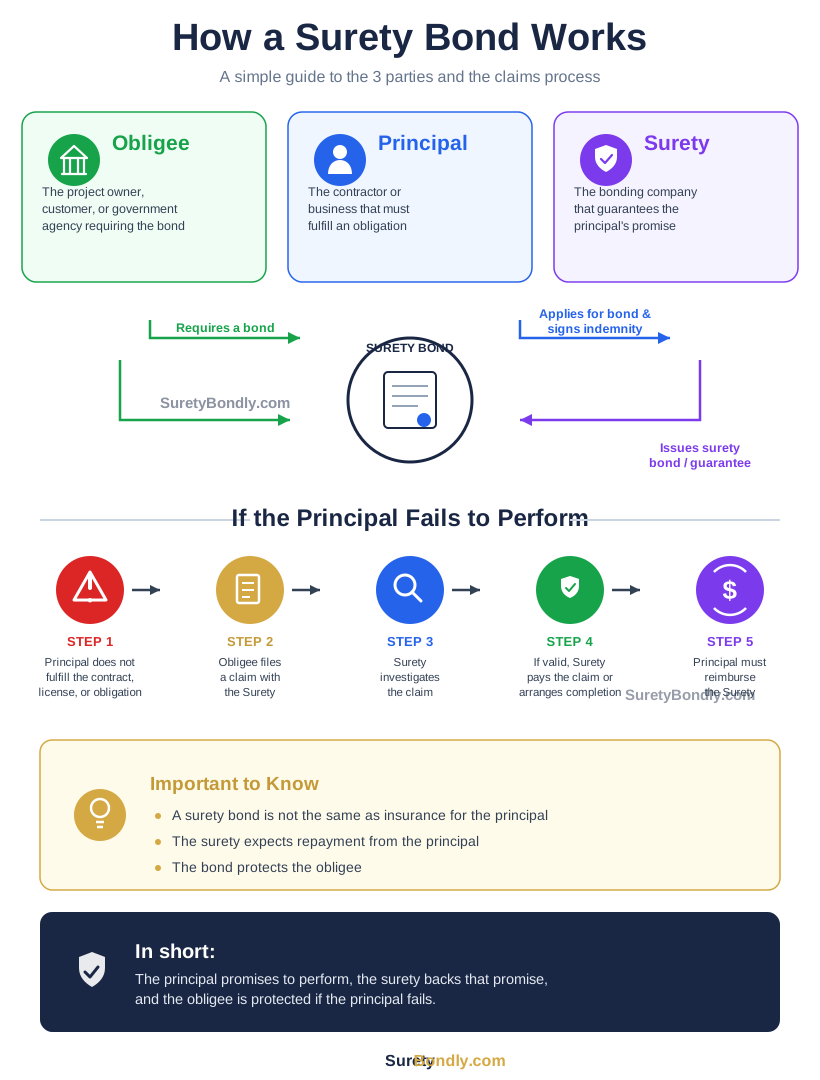
If a notary public causes financial harm to a member of the public through negligence, misconduct, or fraud, the injured party may file a claim against the bond. The surety pays valid claims up to $5,000. The notary is then obligated to reimburse the surety for any amount paid.

Ohio also authorizes Electronic Notarization and Remote Online Notarization (RON). These commission types have additional technology requirements but use the same $5,000 bond.

Who Needs This Bond in Ohio?

How to Get Bonded — Step by Step

  1. Complete the Ohio notary application through the Ohio Secretary of State's Notary.Ohio.gov portal.
  2. Pass the required notary education course (3-hour course for first-time applicants).
  3. Obtain your surety bond. Click "Get Your Bond Now" on this page. Most applicants are approved and receive a bond certificate immediately.
  4. File the bond and take your oath. Present the bond and take the oath of office before a judge or clerk of courts in your county. The clerk records the commission.
  5. Receive your certificate of appointment from the Secretary of State's office.

Renewal & Continuous Bond Coverage

Ohio notary commissions are 5-year terms. Your bond must cover the entire 5-year period. When renewing, you must take the oath of office again and file a new bond. Start the process 45–60 days before your current commission expires. Note that Ohio's 2019 notary law reforms changed the oath-filing procedure — confirm the current process with your county clerk.

Frequently Asked Questions

Does Ohio require a notary bond?

Yes. Ohio Revised Code §147.04 requires every notary public to obtain and file a $5,000 surety bond as a condition of commissioning. Without the bond, the Secretary of State will not issue a commission.

Where do I file the Ohio notary bond?

Under Ohio's updated notary law, you take your oath and file paperwork through the county clerk of courts. The Secretary of State then receives the completed filing and issues the commission certificate. Contact your county clerk for the specific local procedure.

Is a $5,000 bond enough to protect against serious errors?

The $5,000 bond is the statutory minimum. For greater protection against liability, many Ohio notaries carry a notary errors & omissions (E&O) insurance policy in addition to the required bond. E&O covers professional liability claims that exceed the bond amount.

How long does it take to get the bond?

In most cases, the bond is issued instantly after you complete the short online application. You can have your bond certificate in hand within minutes — well ahead of any county clerk appointment.

Ready to get your Ohio Notary Public Bond?

Apply in 2 minutes. Most quotes returned same day.

Start Your Application

Related: All Ohio surety bonds · What is a surety bond? · How surety bond costs are calculated

Underwriting Disclosure. All surety bond applications are subject to underwriting review and approval by the issuing surety company. Quoted premiums are estimates only; final pricing is determined by individual underwriting factors, which may include personal and business credit history, financial statements, industry experience, and claims history. Many bonds qualify for instant online approval, while others may require additional documentation, financial review, or indemnitor signatures prior to issuance. SuretyBondly makes no representation, warranty, or guarantee of approval, eligibility, premium amount, bond form, or issuance timing. Bond amounts, forms, and requirements are governed by the applicable obligee and statutory authority and may change without notice. Information provided on this page is for general informational purposes only and does not constitute legal, financial, or tax advice.